
It is not an idealistic entity, but as a functional agent
Since the early 21st century, one frequently used argument in discussions of international politics has been the recognition that ‘America is no longer the world’s policeman’. This view was reinforced by the policy of restraining foreign intervention, clearly articulated during the Obama administration, and by the subsequent stance, articulated by former Secretary of State Antony Blinken, that America does not have the capacity to manage all problems on its own. Domestic reflection on the long and costly military interventions in Iraq and Afghanistan gave the international community the impression that American diplomacy had reached a turning point.
The Trump administration, which championed ‘America First,’ initially appeared to follow this course. It is still fresh in memory how the US, claiming it could not extend its reach to defend other nations, demanded increased military spending from allies such as North Atlantic Treaty Organization member states, Japan, and South Korea, arguing they should bear their fair share of the burden. Yet, since the start of this year, the US has intervened in Venezuela and, more recently, Iran, seemingly undeterred by accusations of violating international law.
Does the interpretation of ‘the end of the world’s policeman’ truly capture the structural shift in American diplomacy? Today’s America continues to perform ‘policing functions’—indeed, it may be ‘returning’ to them in a different form.
My position does not deny that the United States has, as an ideal, abandoned the role of ‘world’s policeman’. Rather, the issue lies in arguments that equate abandoning the ideal with abandoning the function. Historically, American foreign action has always unfolded within the tension between moral discourse and structural imperatives. This article seeks to clarify that continuity.
What does the concept of ‘global policeman’ signify?
The expression ‘global policeman’ has been used less as a strict theoretical concept and more as a metaphor symbolising America's international role after the Cold War. However, in early 20th-century American diplomatic history, this concept is by no means new.
The Theodore Roosevelt administration explicitly stated in the Roosevelt Corollary of 1904 that America possessed the right to exercise ‘international police power’ in the Western Hemisphere. Crucially, this ‘police power’ was grounded not in abstract ideals such as universal justice or a civilizing mission, but in the highly pragmatic and functional objectives of maintaining order and eliminating destabilizing factors.
American intervention in Caribbean policy at that time was less about fulfilling a moral mission and more about securing the stable market environment necessary for its own industrialised nation. In other words, the ‘policeman’ should be understood not as an idealistic entity, but as a functional agent maintaining a specific order.
The structural relationship between industrial society and international police power
The central thesis of my opinion is that American external expansion is not the result of individual policy decisions but a structural imperative of industrial society. As William Appleman Williams and Walter LaFeber have noted, industrial society inherently contains overproduction and market instability, contradictions that have been temporarily alleviated through overseas expansion.
Within this context, the Caribbean held profound significance for America. Its geographical proximity, strategic maritime routes, and appeal as a destination for capital investment compelled America to manage the region as an ‘informal empire’. The Roosevelt Corollary was nothing less than the translation of this structural imperative into political language.
Crucially, the ‘police power’ referred to here was not a temporary or exceptional measure. It was a function repeatedly demanded for as long as industrial society persisted. Consequently, even when America later rejected the role of ‘global policeman’, this rejection did not dismantle the structure itself. It thus always contained the potential for similar functions to resurface in different forms.
The changing image of the ‘global policeman’
America’s restraint in foreign intervention during the 21st century is often described as a historical break. However, it is more accurate to understand this not as a break, but as a change in the form of its exercise.
Comparing early 20th-century Caribbean policy with early 21st-century Middle East policy reveals significant differences. While the former was characterized by long-term domination and institutional intervention, the latter features short-term, limited, and punitive interventions. Yet this difference does not signify the disappearance of policing functions. Rather, it represents an abandonment of the high-cost form of nation-building, refined into more efficient means of maintaining order.
US diplomacy, since the Obama administration, has explicitly stated it will not ‘protect everything in the world.’ Yet it remains grounded in a policing logic, setting ‘lines that must not be crossed’ and exercising coercive force when these are breached. This logic is essentially isomorphic to the ‘international policing power’ of the Roosevelt era.
Recent US-Iran clashes and the contemporary manifestation of ‘police power’
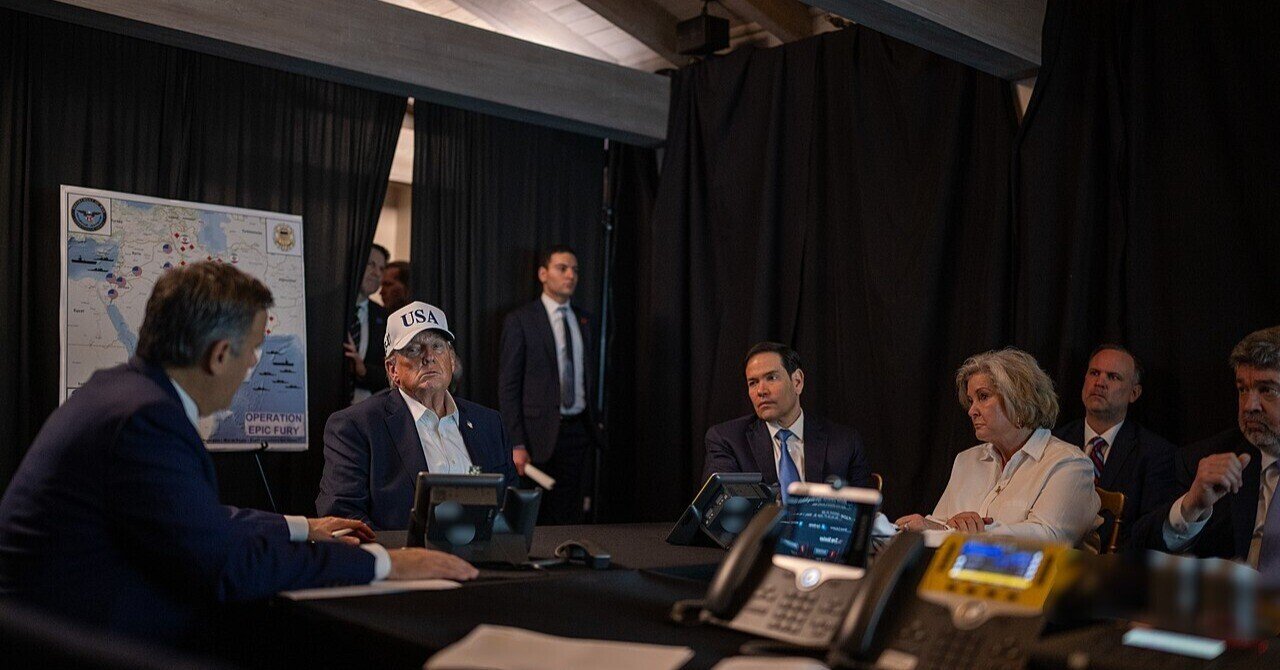
The recent military clashes in Iran provide a crucial case study for testing this argument. These clashes are characterized as limited use of force, primarily aimed at retaliation, deterrence, and order maintenance against specific acts, rather than seeking full-scale war or occupation.
This bears striking similarities to early 20th-century Caribbean policy. As noted, Roosevelt-era international policing power functioned to forcibly restore order externally when unstable political and financial conditions were deemed detrimental to the international order.
The military conflict between the US and Iran can likewise be understood through a similar logic. Here, ideological discourses such as ‘regime change’ or ‘civilisation’ are not foregrounded; rather, emphasis is placed on re-establishing deterrence, punishing acts of disorder, and defending the existing international economic and security order.
The background to the conflict with Iran
The question is why this policing function has become manifest in relation to Iran. According to my theoretical framework, this is not reducible to the hostility or differing values of a specific nation.
Rather, Iran has been positioned as an ‘instability factor’ threatening the order demanded by modern industrial society in the following respects: its relationship with the international energy market, its impact on regional hegemonic structures, and its tensions with the international financial and trade order.
These issues bear structural similarities to those faced by Caribbean nations in the early 20th century. Thus, American intervention should be understood not as a ‘response to hostility’, but as ‘addressing instability’.
In this respect, the confrontation between the US and Iran represents a contemporary variation of the policing power exercised by modern industrial society over its peripheries.
Conclusion
Thus far, using the theoretical framework and concept of international policing, I have argued that the US, purportedly having ‘renounced its role as global policeman’, cannot in fact escape this function. The recent military conflict between the US and Iran provides a concrete example of this structural recursion.
The US is no longer the ‘global policeman’ speaking for universal justice. However, as long as it remains the central state of modern industrial society, it cannot deny its role as the entity exercising coercive force to maintain order. Its Caribbean policy in the early 20th century and its military actions in the Middle East in the 21st century, while differing in era and form, are permeated by the same structural logic.
Therefore, the notion of ‘America returning as the “world’s policeman”’ signifies not a return to an ideal, but the resurgence of structure.


